DIGITAL MARKETING BLOG
MLM Compliance & Regulatory Requirements: What You Need to Know
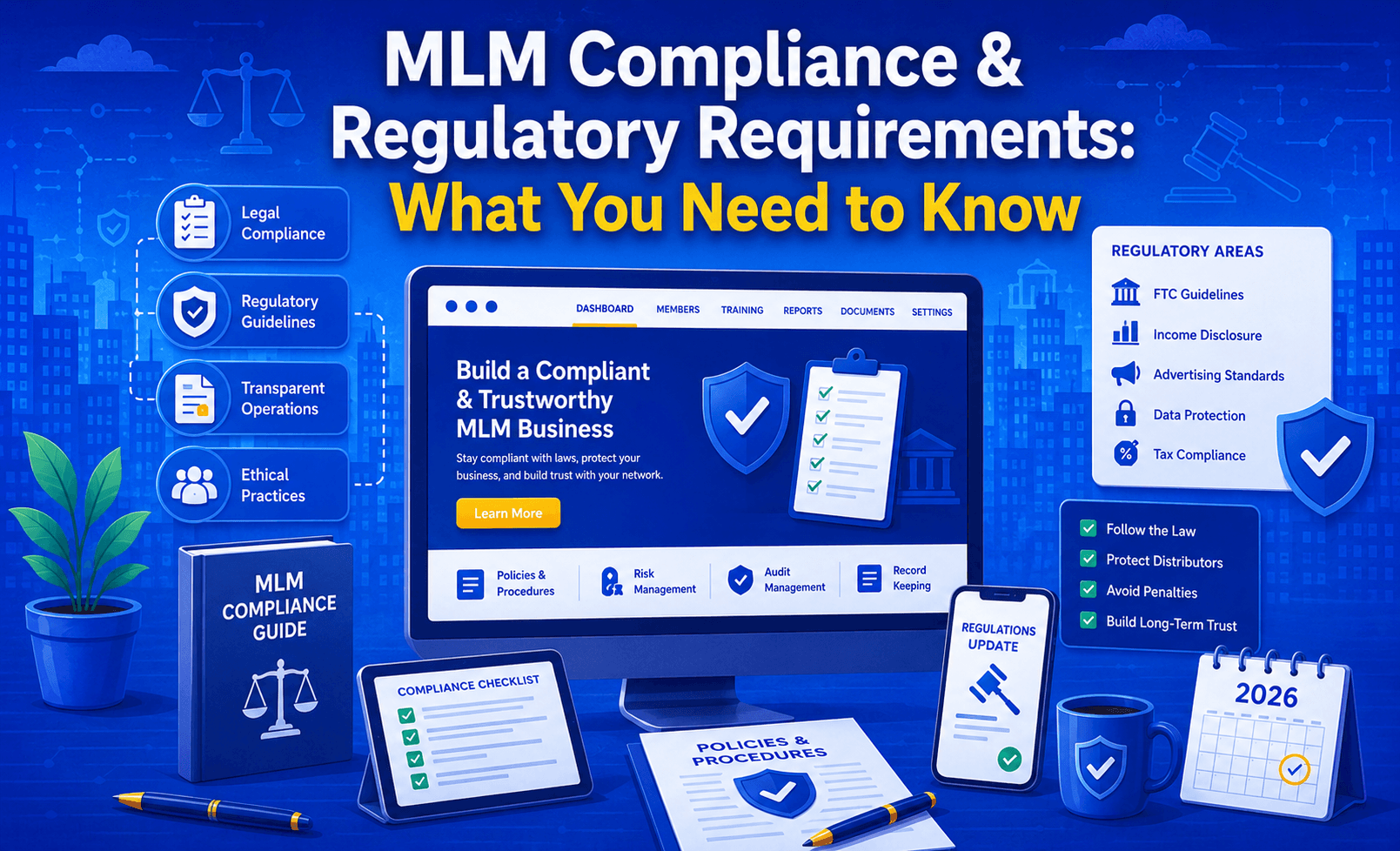
Running a legitimate MLM requires understanding and adhering to complex regulatory requirements. Non-compliance can result in shutdowns, fines, and legal consequences. This guide covers everything you need to know.
Understanding MLM vs. Pyramid Schemes
Legitimate MLM Characteristics:
✓ Primary income from product sales (50%+ of revenue) ✓ Members can earn without recruiting ✓ No required inventory purchases beyond personal use ✓ Company buys back unsold inventory (at least 90%) ✓ Focus on selling to end consumers ✓ Realistic income claims ✓ Members primarily retail products
Pyramid Scheme Red Flags:
❌ Money comes from recruitment, not sales ❌ Must recruit to make money ❌ Must purchase large inventory ❌ No buyback policy ❌ Focus on recruitment over products ❌ Unrealistic income promises ❌ "Become rich quick" messaging
FTC (Federal Trade Commission) Requirements
1. Income Disclosure Requirements
What you must do:
- Publish annual income disclosure statement
- Show realistic earnings by level
- Include all members in calculations (including inactive)
- Disclose that most members earn little or nothing
- Show actual percentages, not just averages
What it should show:
Typical Earnings (Last Year)
- 50% of members earned $0-$100
- 30% of members earned $101-$1,000
- 15% of members earned $1,001-$10,000
- 4% of members earned $10,001-$50,000
- 1% of members earned over $50,000
- Average earnings: $2,500 (skewed by top earners)
- Median earnings: $150
Why it matters: Prevents misleading earnings claims and protects consumers.
2. No Inventory Loading
What you cannot do:
- Require members to purchase large inventory upfront
- Pressure members to buy more than they can retail
- Compensation based on inventory purchases (not sales)
- Require ongoing inventory purchases to remain active
What you can do:
- Offer starter kits ($100-$500)
- Allow optional inventory purchases
- Pay commissions only on actual retail sales
- Compensate based on customer sales, not purchases
Why it matters: Prevents the "pay-to-play" scheme structure that makes MLMs illegal pyramids.
3. Buyback Guarantee
Requirement: Buy back unsold inventory at 90% of purchase price within 12 months.
Implementation:
- Clear buyback policy in writing
- Easy process for member returns
- No questions asked policy
- Timely refunds (30 days)
- No restocking fees
Exceptions:
- Retail items (consumables) don't require buyback
- Items marked "non-returnable" at purchase
- Damaged goods not covered
Why it matters: Protects members from being stuck with unsold inventory.
4. Retail Sales Requirement
What the FTC expects:
- Majority of sales to retail customers (not members)
- At least 10 customers per member (recommendation)
- Sales to non-participants for 50%+ of revenue
- Evidence of customer sales (receipts, transaction history)
How to track:
- Tag retail vs. wholesale purchases in software
- Require member identification on orders
- Track customer (non-member) purchases separately
- Generate retail sales reports
Why it matters: Distinguishes legitimate MLM from pyramid schemes.
5. Income Claims Restrictions
What you cannot claim:
- "Earn $10,000/month" (specific figures)
- "Average member income" (if including inactive members)
- Success stories without disclaimers
- "Passive income" from recruitment alone
What you can claim:
- "Most members earn little or nothing"
- Based income disclosure statement
- Retail earnings potential
- Honest testimonials with disclaimers
- Actual member earnings with full context
Example of compliant claim:
"Susan earned $5,000 this month, but she works 30+ hours weekly, recruited 15 people, and has been with us for 3 years. Most new members earn less than $500. See full income disclosure for details."
6. No Recruitment-Based Income
Prohibited:
- Commission solely for recruiting
- Income from "downline recruitment" without product sales
- Bonuses for "head count" recruitment
Allowed:
- Commissions on products sold by recruits
- Matching bonuses if retail sales condition is met
- Rank bonuses tied to personal sales volume
- Team volume bonuses from product sales
Why it matters: Ensures income comes from products, not recruitment.
State-Specific Regulations
States with Special MLM Laws:
California
- Stricter inventory loading rules
- Stronger buyback requirements
- Consumer protection laws apply
- Attorney General enforcement
- Private right of action for consumers
Illinois
- Specific MLM statute
- Bonding requirements for MLM companies
- Registration requirements
- Civil penalties for violations
New York
- General Business Law Article 34
- Registration required
- Income disclosure required
- Bonding requirements
Other States:
- Massachusetts, Missouri, Ohio, Georgia, etc. have specific MLM laws
- Requirements vary significantly
- Must research each state where you operate
What to do:
- Research laws in every state you operate
- Consult with MLM attorney
- Document compliance efforts
- Adjust policies for strictest requirements
- Regular compliance audits
International Compliance
European Union (GDPR)
- Stricter data protection rules
- Personal data safeguards
- Right to be forgotten
- Privacy impact assessments
- Data processing agreements
Canada
- Competition Act restrictions
- Consumer Protection Act
- Privacy laws
- Similar pyramid scheme restrictions
Other Regions
- UK: Similar to GDPR
- Australia: Strict pyramid scheme laws
- China: Tightly regulated, often banned
- India: Recent crackdowns on illegal MLMs
Building Compliance into Your Software
Essential Software Features:
1. Income Disclosure Automation
- Track all member earnings
- Calculate percentages automatically
- Generate annual disclosures
- Version control documents
- Audit trail of changes
2. Inventory Tracking
- Tag purchases as personal or inventory
- Track inventory age
- Alert for old inventory
- Facilitate buyback process
- Refund tracking
3. Retail Sales Tracking
- Separate retail vs. wholesale
- Customer purchase history
- Retail sales reporting
- Member verification
- Compliance reporting
4. Compensation Documentation
- Calculation audit trail
- Commission verification
- Compliance report generation
- Manual override logging
- Dispute documentation
5. Member Verification
- KYC documentation
- Age verification
- Address verification
- Tax ID verification
- Ongoing verification
6. Compliance Reporting
- Automated compliance reports
- Regulatory requirement checklists
- Audit readiness tools
- Violation alerts
- Remediation tracking
Building a Compliant MLM
Step 1: Legal Foundation
- Hire MLM compliance attorney
- Draft Terms & Conditions
- Create Compensation Plan document
- Write Income Disclosure statement
- Establish buyback policy
Step 2: Documentation
- Document all policies
- Create member handbook
- Develop training materials
- Prepare compliance manual
- Create approval processes
Step 3: Technology
- Implement compliant software
- Set up tracking systems
- Create reporting dashboards
- Establish audit trails
- Build verification systems
Step 4: Training
- Train management on compliance
- Educate members on rules
- Create enforcement procedures
- Document all training
- Regular refresher courses
Step 5: Monitoring
- Regular compliance audits
- Member communication monitoring
- Income verification
- Retail sales verification
- Inventory tracking
- Dispute resolution
Step 6: Documentation
- Keep detailed records
- Document all decisions
- Maintain evidence of compliance
- Track all changes
- Prepare for audits
Red Flags That Trigger Investigation
FTC typically investigates when:
- ❌ Most members earn no income
- ❌ Income comes from recruitment, not sales
- ❌ No clear retail customer base
- ❌ High failure/churn rates
- ❌ Inflated income claims
- ❌ Pressure to buy inventory
- ❌ No buyback policy
- ❌ Aggressive recruitment tactics
- ❌ Complex or confusing comp plans
- ❌ Unrealistic promises
If investigated:
- Have documentation ready
- Cooperate with authorities
- Provide complete records
- Don't destroy documents
- Consult with attorney
Income Disclosure Statement Template
## 2024 Income Disclosure Statement

**Based on data from [X] active members**

### Commission Earnings Only:

| Earnings Range | % of Members |
|---|---|
| $0 | 45% |
| $1-$100 | 25% |
| $101-$500 | 15% |
| $501-$1,000 | 8% |
| $1,001-$5,000 | 5% |
| $5,001-$10,000 | 1.5% |
| Over $10,000 | 0.5% |

**Median Annual Earnings**: $150
**Average Annual Earnings**: $2,800*

*Average is skewed by top earners. Most members earn significantly less.

### Retail Earnings:
Average retail profit margin: 30-40%
Average member retail sales: $500/month

### Important Notes:
- Most members earn little or nothing
- These are commission earnings only, not including product purchases
- Success requires effort and product knowledge
- Top earners spend 30+ hours per week
- Results vary significantly
Common Compliance Mistakes
❌ Mistake 1: Vague Compensation Plan
Problem: Members don't understand how commissions work Solution: Create detailed, visual documentation
❌ Mistake 2: No Inventory Buyback
Problem: Triggers FTC investigation, illegal in many states Solution: Implement clear buyback policy with 90% guarantee
❌ Mistake 3: No Income Disclosure
Problem: Illegal in many jurisdictions Solution: Publish annual income disclosure showing realistic earnings
❌ Mistake 4: High Recruitment Focus
Problem: Looks like pyramid scheme Solution: Emphasize retail sales, require retail customers
❌ Mistake 5: Inventory Loading
Problem: Major FTC violation Solution: Limit inventory to reasonable amounts, easy returns
Compliance Checklist
Legal Documents
- Terms & Conditions
- Compensation Plan (detailed)
- Income Disclosure Statement
- Buyback Policy
- Privacy Policy
- Training Materials
- Member Handbook
Operational Systems
- Income tracking system
- Retail sales tracking
- Inventory management
- Buyback process
- Dispute resolution
- Audit system
- Compliance reporting
Team Training
- Legal team briefing
- Management training
- Member education
- Regular refreshers
- Documented proof
Monitoring & Reporting
- Monthly compliance review
- Income verification
- Retail sales audit
- Inventory tracking
- Annual disclosures
Hiring MLM Legal Experts
What to Look For:
- ✓ Specific MLM experience
- ✓ Knows FTC regulations
- ✓ State law expertise
- ✓ Success stories with other MLMs
- ✓ Ongoing compliance support
- ✓ Training availability
Questions to Ask:
- Do you have MLM-specific experience?
- How often do regulations change?
- What compliance risks do you see in my plan?
- How can I defend against FTC investigation?
- What ongoing support do you provide?
Conclusion
MLM compliance is not optional—it's mandatory for legal operation. The cost of non-compliance far exceeds the investment in proper legal and technical infrastructure.
Key Takeaways:
- Understand the distinction between MLM and pyramid schemes
- Comply with FTC requirements
- Research state-specific regulations
- Implement compliant software
- Document everything
- Monitor for violations
- Train all members
- Consult with MLM attorneys
- Conduct regular audits
- Publish income disclosures
QDCODEX can help you build a compliant MLM platform with built-in compliance features, audit trails, and regulatory requirement management.
Want More Leads from Google?
Grow your online business with expert SEO & digital marketing.
Get Free QuoteQDCODEX
Experts in SEO & Digital Marketing in Chennai
Ready to Grow Your Online Business?
We help businesses rank on Google and generate leads.
Get Free Consultation